
How we work
One team, the whole process
Transport, rigging, tuning and mixing – under one roof. The organiser does not have to coordinate several suppliers and knows at every stage what we need and what we deliver.
How we work together
From enquiry to load-out
Each stage has a clearly defined scope. The organiser knows what our team prepares and when we need information from them.
Enquiry and rider analysis
We check the date, venue, scale and programme. We go through the rider with the artist's engineer.
From the organiserEvent description and riders of all performers
Site visit and system design
When the event requires it, we visit the venue or site. We design system placement, monitors and the frequency plan.
From the organiserVenue or stage plan and access to the site
Equipment preparation
We assemble and test the equipment before departure and plan the crew and load-in schedule.
From the organiserProduction schedule and venue access times
Transport
Equipment travels in our own vehicles, in flight cases.
From the organiserAccess and unloading information
Load-in
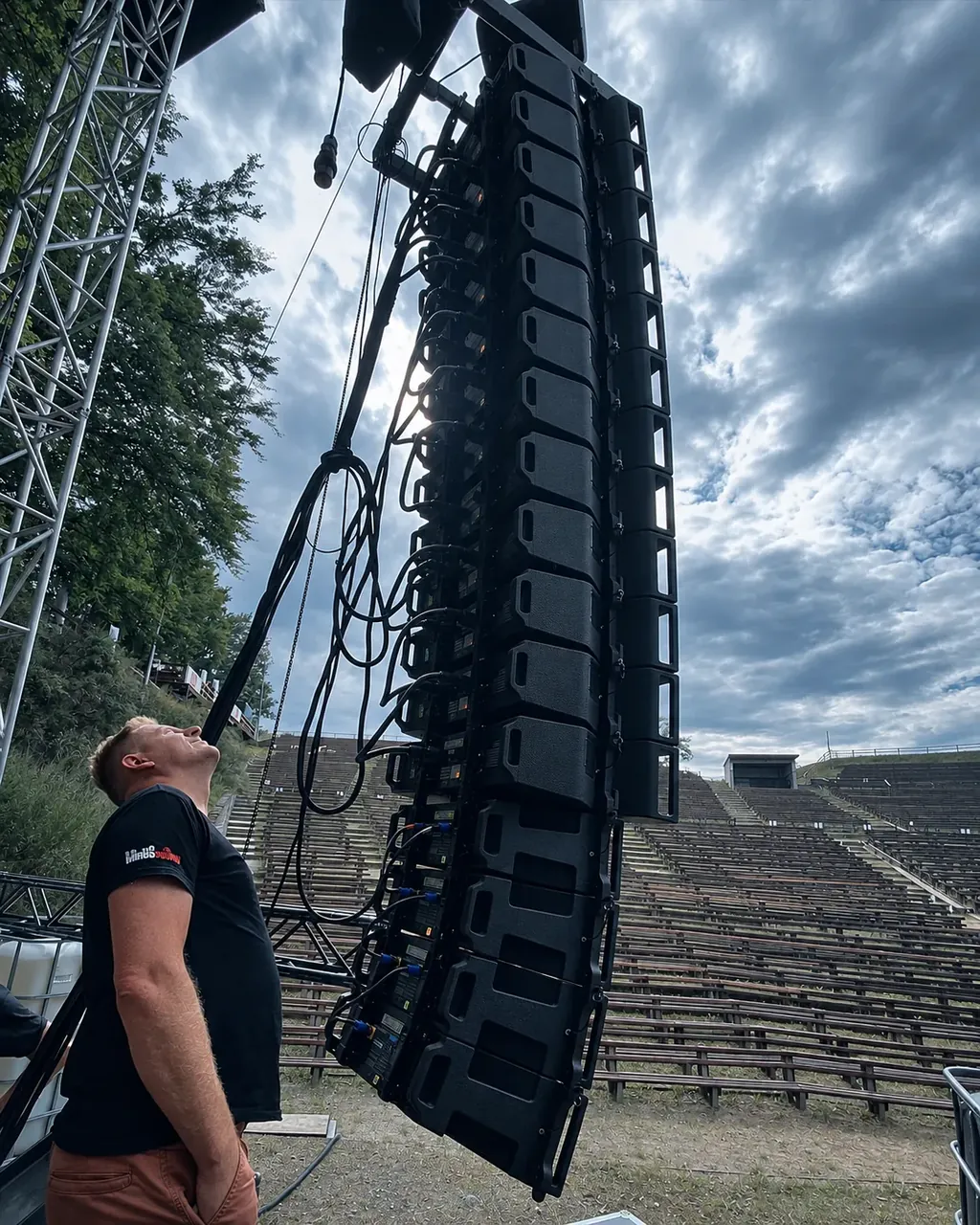
We install the system according to the design and the venue's requirements.
From the organiserAccess to power and installation points
Measurement and tuning
We tune the system to the acoustics before performers arrive, then run the soundcheck.
From the organiserTime for soundcheck in the schedule
FOH, MON and IEM mixing
Our engineers mix for the audience and the performers throughout the programme.
From the organiserRunning order and information on changes
Load-out
We strike the system within the time set by the venue or organiser and close the production once agreed.
From the organiserLoad-out times agreed with the venue
Rider
Technical riders – how we work with them
A technical rider is the document in which a performer describes their requirements: input list, microphones, monitoring, console and stage plot. For us it is the starting point for choosing the system.
We review the rider together with the performer's engineer. If we propose a substitute, we agree it before the event – never on the day. If a performer has no rider, we help define the requirements based on the line-up and programme.
A rider usually includes
- input list
- stage plot
- FOH and monitor console requirements
- stage monitors or IEM
- microphones and stands
- time for load-in and soundcheck
FAQ
Questions about working with us
What information do you need to prepare a quote?
The date, venue (building or site), type of event, expected attendance, programme and the performers' technical riders, if available. A venue or stage plan also helps. The fuller the description, the more accurate the quote.
Do you work from artists' technical riders?
Yes. The rider is the starting point for choosing the system, console and monitoring. Any substitutions are agreed directly with the artist's engineer before the event.
How do you prepare sound for an outdoor event?
We establish the size and shape of the audience area, the FOH position, power and access. We plan protection from rain and wind and coordinate wireless frequencies. For large sites we consider additional coverage zones.
Do you provide FOH and monitor engineers?
Yes, our FOH and monitor engineers work at our events. When a performer brings their own engineer, we provide system support and technical assistance on site. Crew size is agreed individually for each event.
When is a site visit worthwhile?
When the event is outdoors or in a venue we do not know, in a room with difficult acoustics, for a large audience, or when rigging and power need to be agreed. We schedule the visit with the organiser.
How is the system matched to the venue's acoustics?
We consider the size and shape of the audience area, the distance to the last row, reverberation and interior materials, and the nature of the programme – music, speech or both. On that basis we choose the system, its placement and settings, and tune it on site.