A wireless microphone gives freedom of movement on stage. Behind that convenience, however, is a technology that needs careful preparation.
At a concert, a conference or a large gala, many devices using radio transmission may be operating in the same space.
If their operation is not coordinated, there is a risk of interference and dropouts.
Invisible radio traffic
A modern production relies on many wireless systems.
These include microphones for singers, hosts and panellists, in-ear monitoring systems, intercoms and devices used by other technical teams.
Not all of them operate in the same frequency ranges, but making them coexist requires knowledge of the radio conditions at the venue.
What complicates matters is that the availability of individual bands depends on local regulations and other users of the spectrum.
A configuration that works well in one city is not necessarily the right one in another.
What can cause interference?
One problem is poor frequency selection, especially when several devices operate in similar ranges.
Intermodulation products created when transmitters operate simultaneously can also play a role.
Another factor is signal propagation: obstacles, metal structures, antenna placement and the movement of performers.
That is why choosing a good wireless system does not solve every problem on its own.
Planning starts before the event
RF coordination should be part of the technical preparation.
The first step is to gather information about every system that will operate at the venue.
The next is to check which frequencies are available and how each device can be configured.
For larger productions, dedicated software for coordinating radio systems is helpful.
On that basis, a plan for operating the devices is prepared.
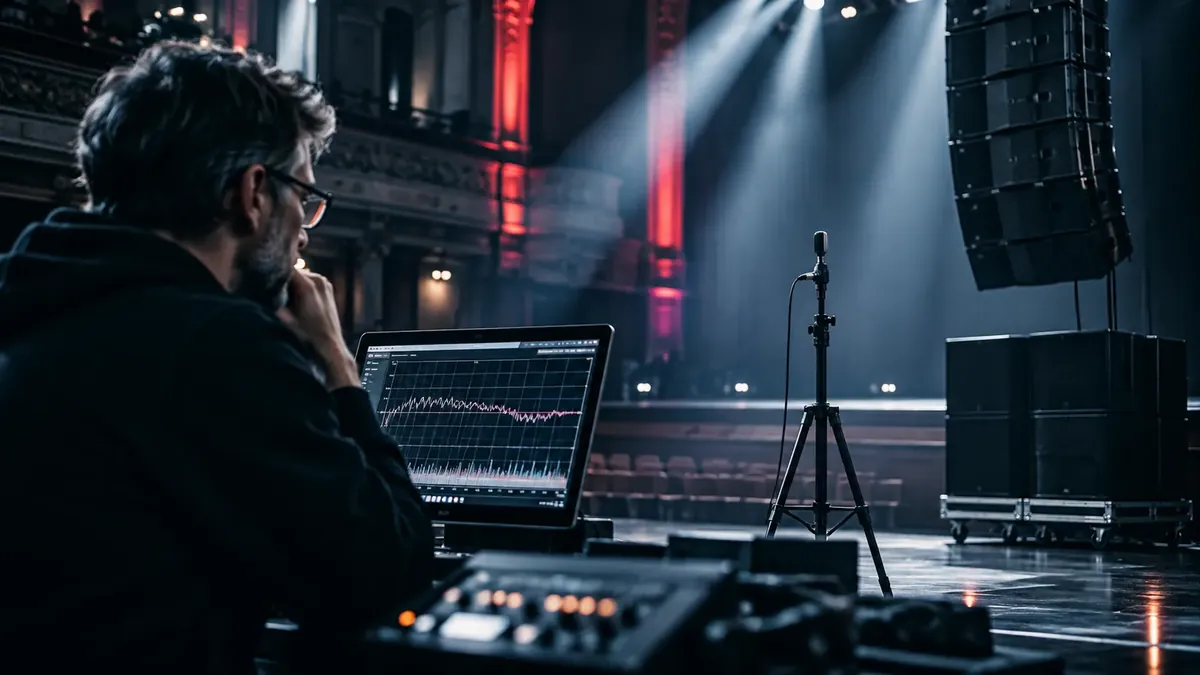
Scanning the band on site
Real conditions can differ from the assumptions.
That is why, after arriving at the venue, it is worth checking the radio environment and verifying the plan prepared in advance.
A band scan identifies active signals and shows whether the selected frequencies are suitable.
Sometimes the configuration has to be changed.
Antennas and device placement
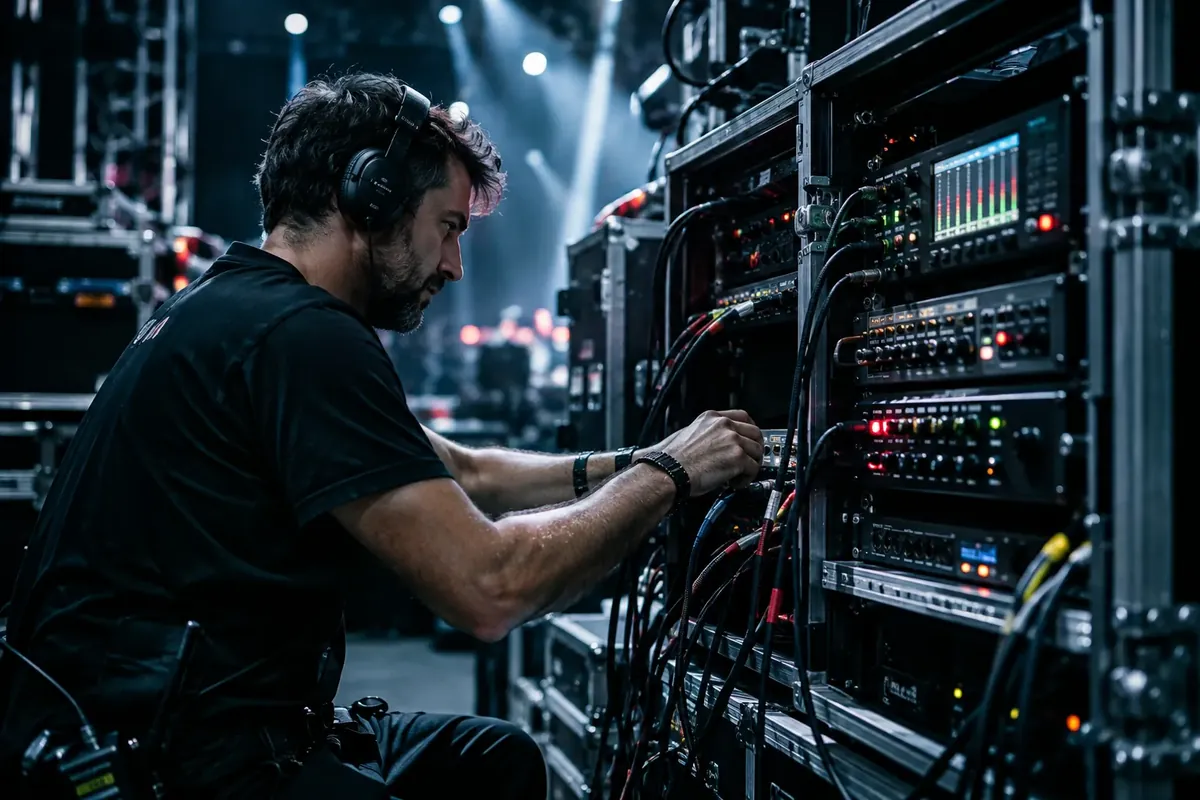
Even correctly chosen frequencies will not guarantee stable transmission if the antenna system is poorly designed.
Distances, obstacles, antenna directivity and the way antennas are connected all matter.
An antenna placed behind a metal stage structure may perform worse than one positioned where it can receive the signal properly.
During the event it is also worth monitoring transmitter battery levels and radio signal strength.
Technology and experience
At MIRUSSOUND we use, among others, Shure Axient Digital systems, Sennheiser EW 500 G4 and Sennheiser EW IEM G4 in-ear monitoring.
They are parts of a larger technical system, and their configuration depends on the type of event.
There is no single set of settings that suits every stage, conference and location.
What should the organiser know?
When preparing an event, it is worth telling the technical team about every planned wireless system – including those brought by artists, speakers or other suppliers.
The earlier this information is collected, the easier it is to plan how the devices will work together.
In professional wireless work, what matters most is not freedom of movement itself, but a stable signal that performers and organisers can rely on.