The audience hears a concert from one perspective. The musicians on stage need a completely different picture of the sound. That is why a professional music production runs several mixing and monitoring systems side by side.
The most important are FOH, MON and IEM. They draw on signals from the same instruments and microphones, yet each serves a different purpose.
FOH – sound for the audience
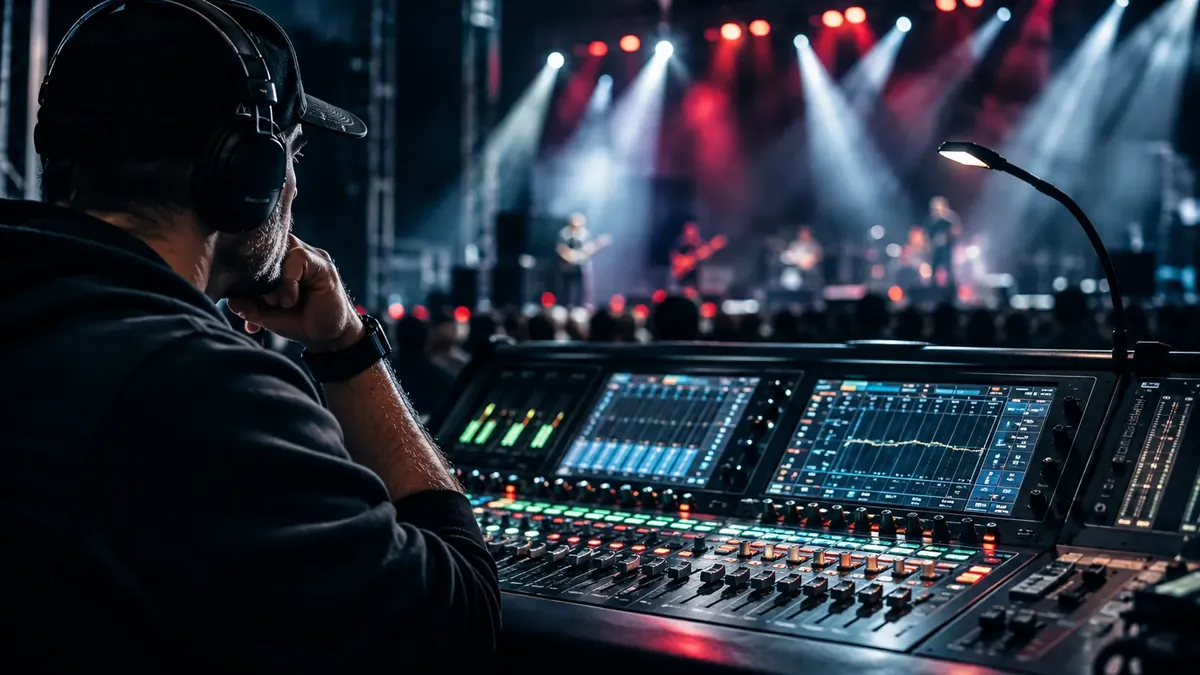
FOH, or Front of House, is the mixing position for the sound that reaches the audience.
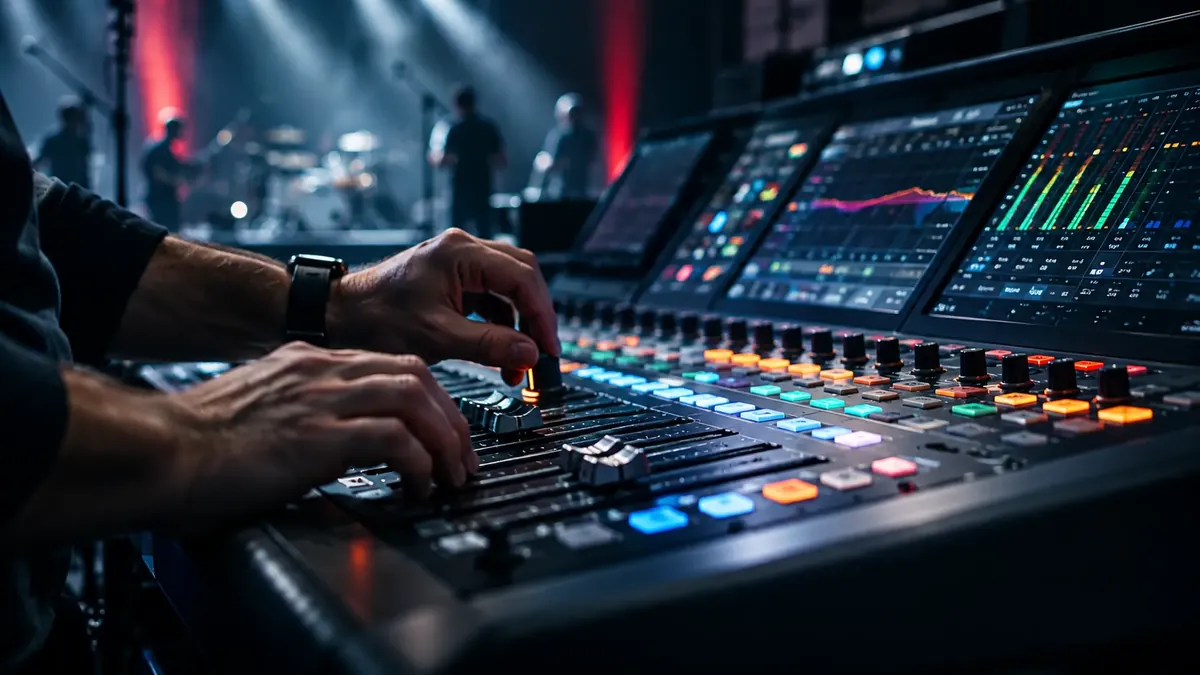
The FOH engineer is responsible for the final musical picture the audience hears: the balance between instruments and vocals, the dynamics and the character of the whole mix.
The engineer also has to account for the space. The same band can sound completely different in a club, an arena and an open-air venue.
That is why the FOH position should be placed where the sound reaching the listeners can be judged properly.
It is not simply a volume control station. It is where the decisions about the sound of the concert are made.
MON – sound for the musicians
On stage, things look different.
The singer needs to hear their own voice, the drummer needs a clear rhythmic reference, and the guitarist may need more of particular instruments.
The monitor system, or MON, makes it possible to build dedicated monitor mixes for each performer.
These mixes do not have to resemble what the audience hears.
In a monitor mix, function comes first. It has to let the musicians play comfortably and stay in time with each other.
At larger concerts, a separate monitor engineer may look after the monitors from a position next to the stage.
Splitting FOH and MON lets each engineer focus on a different set of needs.
IEM – monitoring directly in the ear
IEM, or In-Ear Monitoring, delivers the monitor mix to the performer's in-ear earphones.
It can give musicians more control over what they hear and reduce the need for some conventional stage wedges.
However, IEM is not just a replacement for a loudspeaker on the floor.
It needs a properly prepared mix, well-fitted earphones and correctly organised radio transmission if the system is wireless.
With more performers on stage, coordinating the frequencies of in-ear systems and wireless microphones becomes essential.
The MIRUSSOUND inventory includes Sennheiser EW IEM G4 and Allen & Heath ME-1 personal monitor mixers, among other equipment.
Three systems, one production
FOH, MON and IEM serve different purposes, but they have to work as parts of one project.
During preparation it needs to be clear how many musicians will use conventional monitors and how many in-ears, what the rider requires and whether the production brings its own engineers.
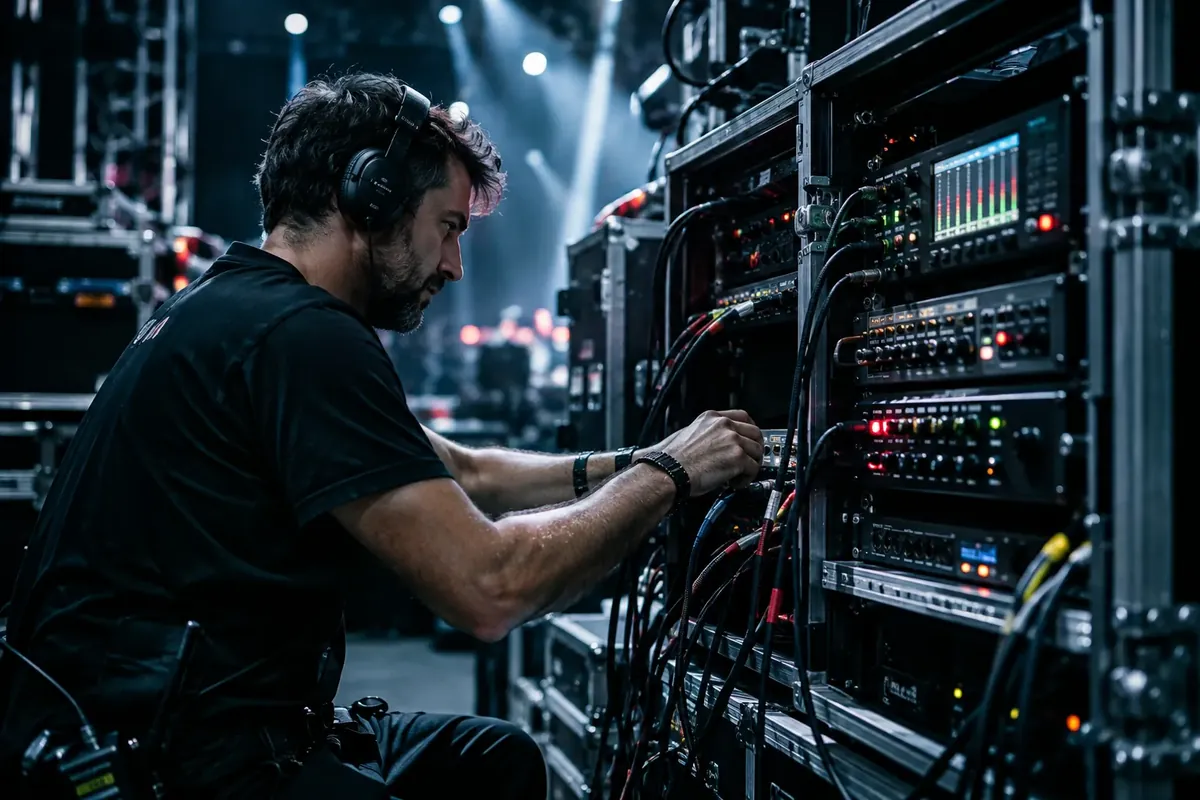
How signals are split between the positions and how technical communication is organised also matter.
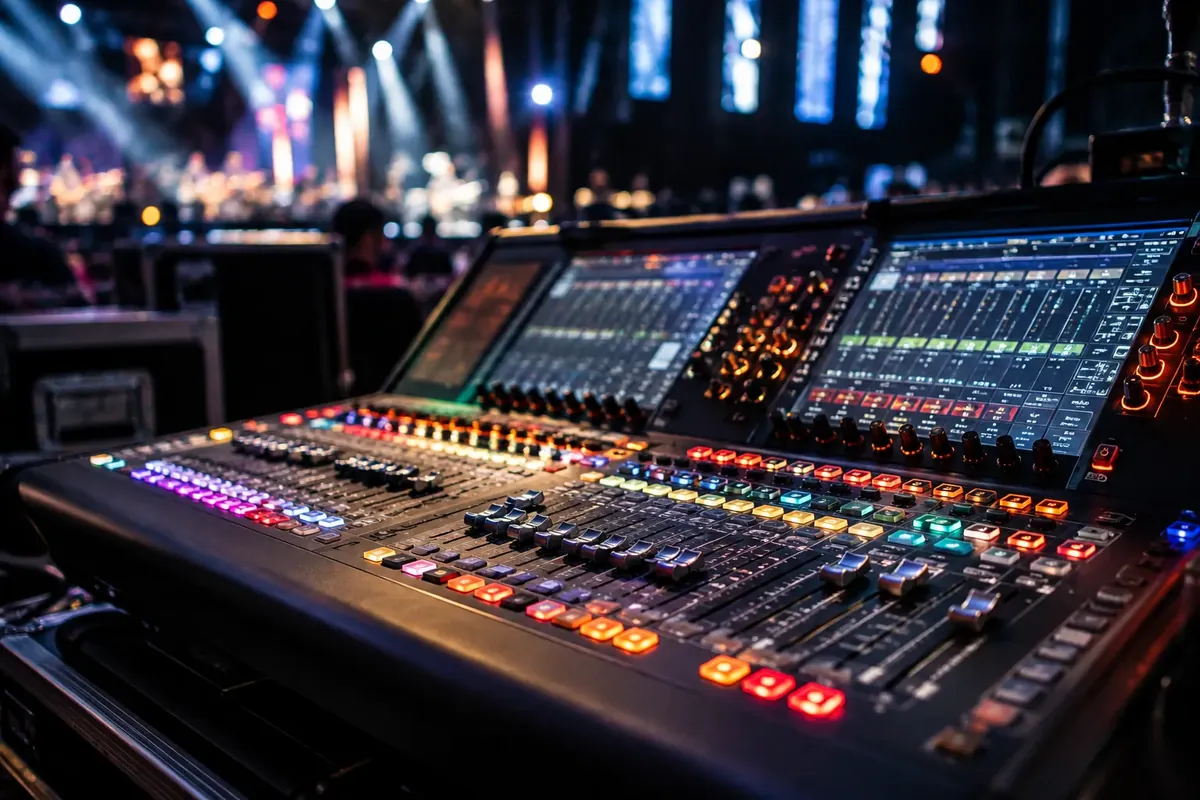
At MIRUSSOUND we use Allen & Heath dLive consoles, among others, which allow a configuration suited to the character of each production.
Why does this matter to the organiser?
Problems with stage monitoring can affect the musicians' comfort, the course of the soundcheck and, in the end, the quality of the concert.
That is why audience sound should never be planned in isolation from the stage systems.
A good concert is not only the sound the audience hears. It is also the conditions that let the artists perform freely.