For the audience, a concert begins when the artist walks on stage. For the sound engineer, it began much earlier.
Behind the sound of an event is a process that covers analysing the requirements, preparing the system, soundchecks and hundreds of small decisions during the performance.
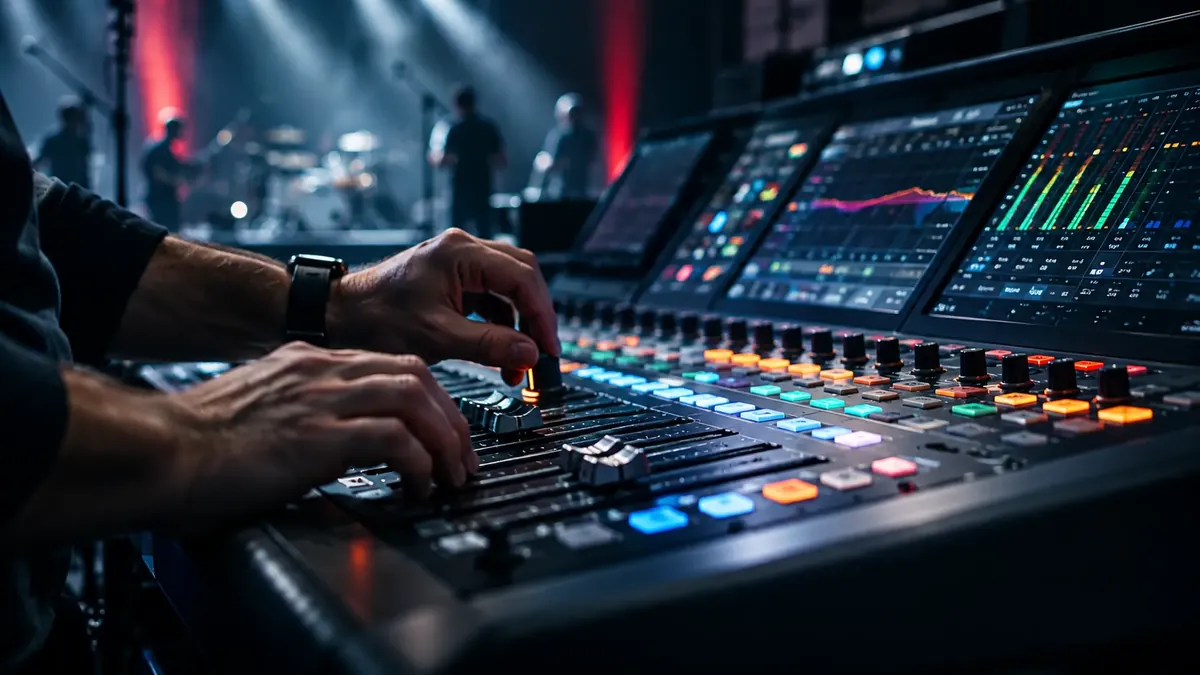
An engineer's work is not just about moving faders. It combines technical knowledge, the ability to listen and an understanding of music.
Before the concert: preparing the system
The first step is to study the event programme, the technical requirements and the stage configuration.
The engineer needs to know which sound sources will be used, how they will be connected and how responsibilities are split between the positions.
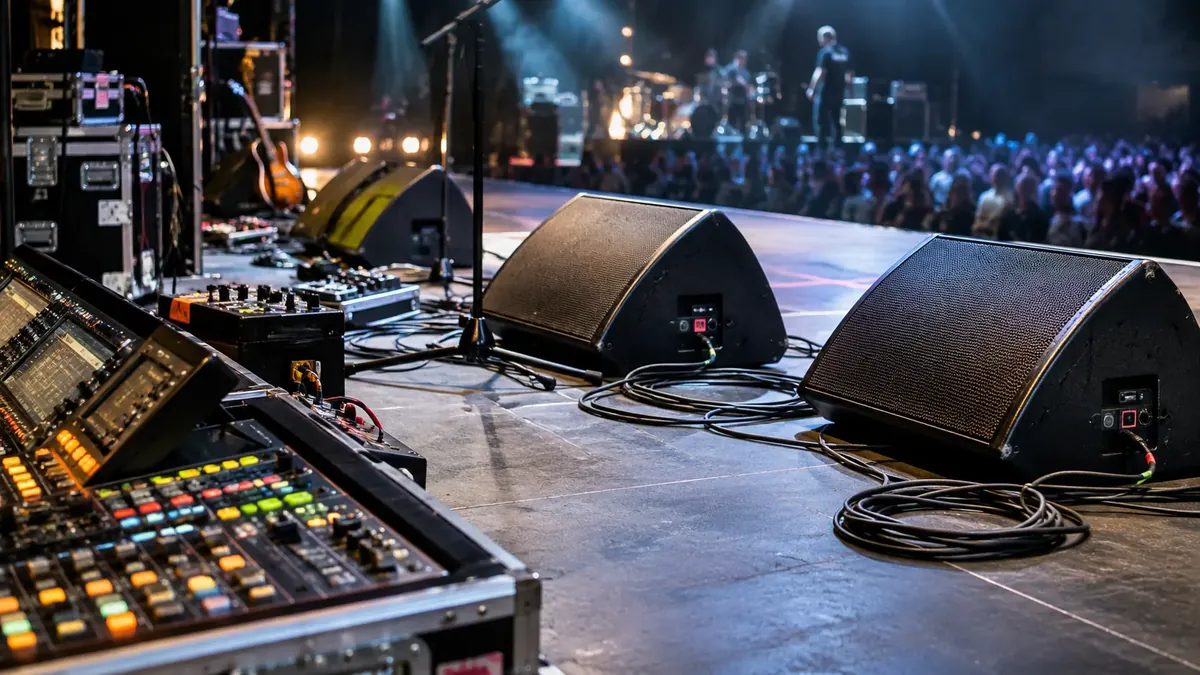
Then the sound system, connections and consoles are checked.
Where the acoustics call for it, the system is measured and tuned to the characteristics of the venue.
Even the best console cannot make up for a poorly configured loudspeaker system.
The soundcheck – the foundation of the mix
The soundcheck is when the engineer gets to know how each source behaves and builds a basic tonal balance.
Signal levels, microphone characteristics, the balance between instruments and the effect of the space on the music are all checked.
The engineer also works with the musicians and with whoever is responsible for monitors.
The aim is not one fixed setting for the whole concert.
The soundcheck creates a starting point for the work during the performance.
A concert is never static
Live music changes all the time.
A singer may change vocal dynamics, a guitarist may switch sounds, and individual songs may need a different balance between instruments.
Add to that the audience and changing acoustic conditions.
The engineer has to react to these changes in real time without losing sight of the character of the music.
The console as a control tool
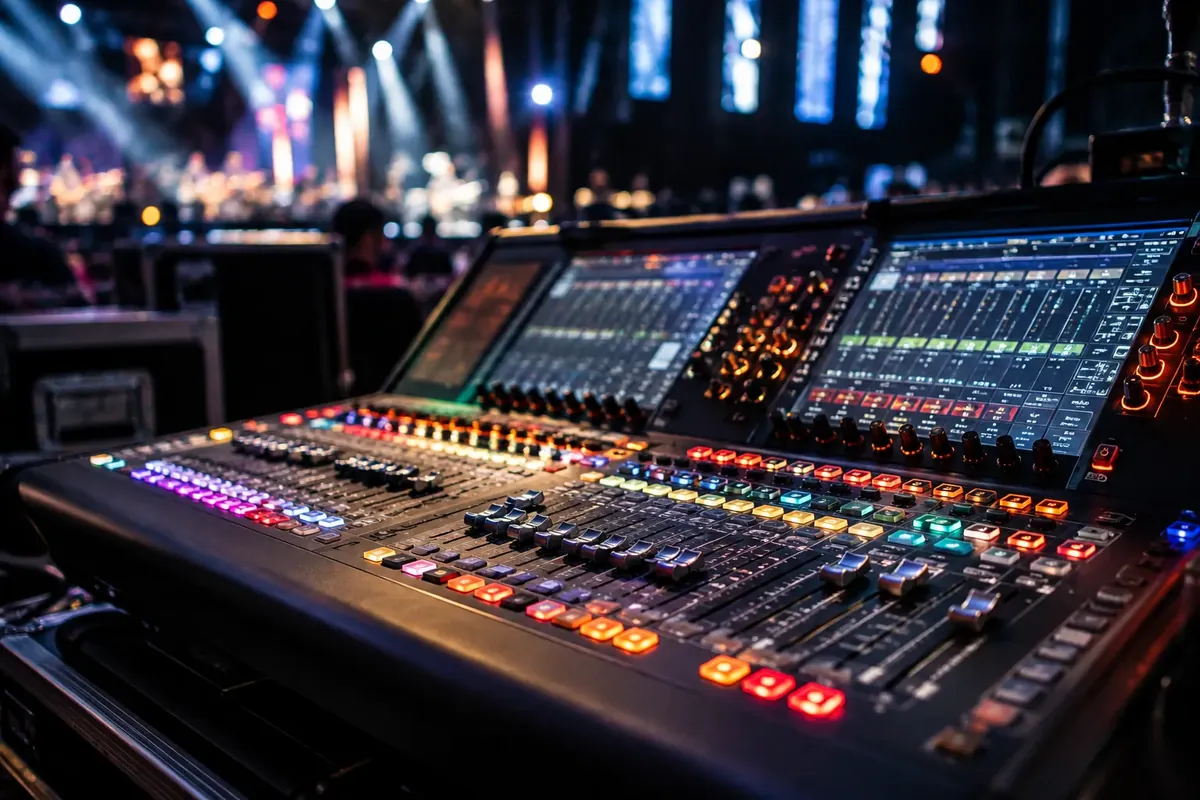
Modern digital consoles make it possible to manage many channels, signal processing and routing.
They also allow settings to be prepared for different parts of a production.
At MIRUSSOUND we use Allen & Heath dLive consoles, among others.
Yet the quality of the result is not decided by the number of features a device has, but by how they are used.
The engineer has to know when to apply EQ, how to control dynamics and how to keep the whole mix balanced.
Listening matters more than looking
A digital console provides a lot of visual information: signal levels, EQ curves, dynamics graphs and channel status.
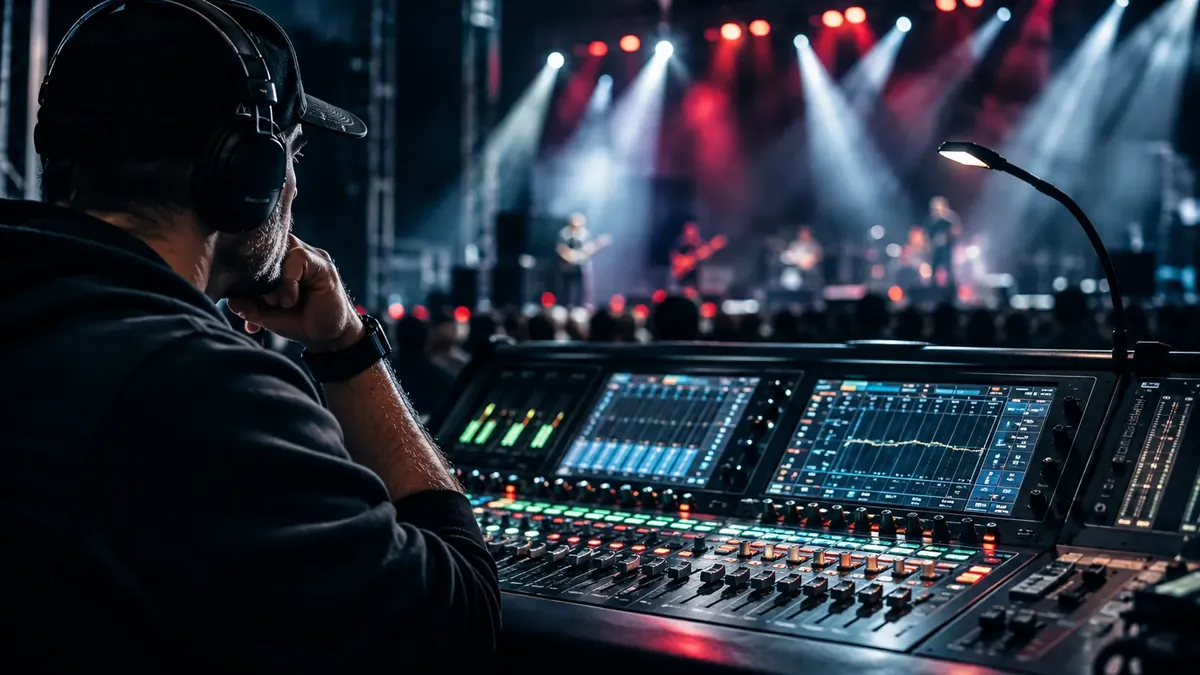
It is very useful, but it does not replace judgement by ear.
The engineer should constantly check what actually reaches the audience.
This is especially important in venues with difficult acoustics, where meters do not fully describe how the music is perceived.
Working with the other teams
FOH mixing is part of a larger production process.
It requires communication with the monitor engineer, stage technicians, the production team and – in some situations – the artist's crew.
Programme changes, unexpected technical problems or the need to adapt the configuration call for fast and precise cooperation.
That is why an engineer's experience covers not only operating equipment but also organising work and making decisions under time pressure.
What should the audience not notice?
The best mix is often the one that draws no attention to the technology itself.
The audience should be focused on the music, the emotions and the performers.
Behind that experience are preparation, the choice of equipment, the engineers' skills and the cooperation of the whole technical team.
A good sound engineer does not try to be the hero of the concert. Their job is to create the conditions in which the music remains the hero.